Category Archives: Daily Meditations

October 6 / Proverbs 6 / Matthew 6

prayer-changes-things

Matthew 6:7-8

And when you pray, do not keep on babbling like pagans, for they think they will be heard because of their many words.  Do not be like them, for your Father knows what you need before you ask him.

The pagans of Jesus’ day would pray to many gods, trying to invoke them to action through a sort of magical incantation of the right repetition of words.  But Jesus tells us to pray to the one true God from a heart of love for Him.

We don’t need many fancy words, because He already knows what we need.  Our prayers should be more conversational then, than incantational.

So why pray if He already knows what we need?

Well, since prayer is conversation with God, it is vital to our relationship-building with Him.  To know someone well, you spend time conversing with them.  And as we do this more, we also align our desires with God’s.  The more we pray in this manner Jesus shows us, the more we embed His values into our daily ethic.

And yes, as the bumper sticker sates, “Prayer changes Things.”  This is true.  “The biblical facts are clear: God’s changeability, not least of which is to withdraw judgement upon repentance, is far more often part of the biblical narrative than the rather rare comment that God is unchangeable, which pertains to God’s utter faithfulness to promises,” says Scot McKnight.  And if that’s not true, if God has every single minute action set in stone, then there would be no real point in praying in any sort of petitional (made up word) sense at all would there?

It appears from Scripture that God’s overall plan is established and known to God while at the same time He grants us freedom within that plan.  To quote McKnight again, “In this model, prayer changes things, and I believe the biblical models of prayer, from Abraham to David to Elijah to Isaiah to Jesus to Paul and the early churches, affirm this interactive model in which prayer sometimes alters the path of history within the overall plan of God in response to the prayers of God’s people. The upload from this theoretical sketch is that our yearning and our aching for God’s name to be hallowed, for God’s kingdom to come, and for others to experience the blessing of God can prompt God to actions that satisfy those yearnings and aches.”

So, while we do not pray in a wordy, incantational fashion, we do pray, and we ask over and over again for what we need within the realm of God’s kingdom (as we see in other parts of Scripture, namely Luke 11 & 18).

How is this different?

Again, could it be more for us than God? He knows how praying for something good multiple times positively affects our brain, our heart, our soul.  Also, something to ponder is the “test” of desire.  How badly do we want something we ask for only once? Twice even?  When my daughters really want something, you better believe they ask no fewer than twenty-seven times for it within a four minute period. And this does demonstrate to me that this may be something they truly desire.  They also ask for what seems like hundreds of things throughout the day, everyday that they soon forget, which shows me they did not really desire those things hardcore.

If you truly want God’s will to be done in a given situation, chances are you’ll pray more than once for it.

What have you prayed multiple times for and seen come to fruition?

What and who do you pray for daily? weekly? regularly?

Proverbs 6:19

God hates it when you cause conflict in community, when you stir up disunity.

God hates it.

Think about that.

Let this sink in, especially when you are the cause of a rift within God’s community of believers.

Yes, Jesus does drive people apart (Mt.10:34-36), but for those who trust and follow Him, they should be the most unified, peaceable people on the planet.

And yes, I will use this quote for the 100th time:

“Don’t you know that a hundred pianos all tuned to the same fork are automatically in tune with each other?”

-A.W. Tozer
 

October 5 / Proverbs 5 / Matthew 5

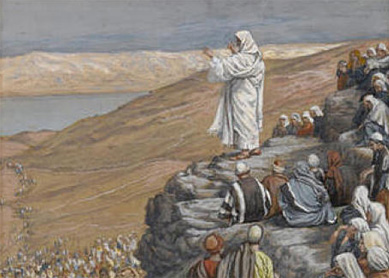
sermon-on-the-mount

Proverbs 5:3

For the lips of the immoral woman drip honey, and her mouth is smoother than oil;

In Israel, the term “immoral woman” referred to one of three things: (1) idolaters who were outside the covenant, (2) Israelites who had once walked with God but turned aside to worship other gods, (3) those in Israel who were unfaithful to their husbands. Each of these contexts speaks of betrayal and forsaking a covenant.

Proverbs 5:15-20

In this passage, “fountains” and “streams” are images used to illustrate sex and its boundaries of propriety. Pictured here is the foolishness of sexual promiscuity: one should neither seek sex from (5:15), nor offer it to (5:16-17), anyone other than his or her spouse.

Proverbs 5:18-20

In erotic language that is similar to Song of Solomon, these verses describe intimacy between a husband and wife. Sexual expression is given by God for the delight of married couples. When marriage is viewed chiefly as a business arrangement, human passion seeks other outlets.

-from The Jeremiah Study Bible


Matthew 5:1

Jesus has just called his first disciples to follow him (4:19, 21), and they have enthusiastically responded to his call to join him in gathering people into the kingdom in the same way they once gathered fish from the sea (4:19; 13:47). Now Jesus begins to teach his disciples how their own lives can serve as examples to others of what the kingdom of God will look like when it comes (5:1–7:29).

“The Sermon on the Mount” (chs. 5–7) is structurally similar to the Mosaic law. Like the Mosaic law, it begins with a reminder of God’s blessing and grace. The first five beatitudes (5:3–7) emphasize that God’s blessing comes to those who understand their need of his mercy, just as the Mosaic law begins with a reminder of God’s gracious rescue of his people from slavery in Egypt (Ex. 19:4; 20:2). Also like the Mosaic law, the Sermon on the Mount describes the way of life that God calls his people to display as a means of showing the world the character of its Creator. Israel was to be a kingdom of priests, mediating God’s character and will for the rest of humanity to all the earth (Ex. 19:5–6). Jesus’ followers are to be salt and light in the world so that it might see their good works and glorify God (Matt. 5:13–16). In addition, both the Mosaic law and the Sermon on the Mount end with a description of the blessing that comes to those who follow their teaching and the trouble that comes to those who disobey (Leviticus 26;Deuteronomy 28–30; cf. Matt. 7:24–27).

It is important to avoid two errors in interpreting the “Sermon on the Mount.” First, it is not a description of the requirements for entering the kingdom of God. Jesus taught this material to those who had already responded to his call to follow him (4:18–22; 5:1). Second, it is not an idealistic description of the way life will function after God has fully established his kingdom in the future. In that day, there will be no need to turn the other cheek (5:39). Rather, these teachings are a description of what life looks like for followers of Jesus as they try to be faithful to him and to the values of God’s kingdom in a world that God has not yet fully transformed. They are about living as ambassadors of God’s kingdom in a foreign land. In short, the Sermon shows us what life should look like for a heart that has been melted and transformed by the gospel of grace, while also making clear the true nature of God’s standards of righteousness—high standards which mean that our right standing with God is ultimately dependent on the grace of the One who tells us of them.

Matthew 5:3-7

These first five blessings affirm an important principle for understanding the Sermon on the Mount. The Sermon is not an instruction manual for winning God’s favor. Rather, it describes how God wants those to live who have already been transformed by his grace because they have understood their weakness and need for his mercy. The “poor in spirit” (v. 3) are those who know that they, as sinners, do not have the spiritual resources necessary to carry out God’s demands. “Those who mourn” and who “hunger and thirst for righteousness” (vv. 4, 6) have experienced the disaster that disobedience to God has brought to the world. Because they understand their true position of weakness before God, the “meek” (v. 5) have a humility that translates into treating others with kindness. The “merciful” are those who understand their own need for God’s mercy (v. 7).

Matthew 5:13-16

The Sermon on the Mount describes how those who have already decided to follow Jesus (4:18–22; 5:1) are called to demonstrate the character of God and his kingdom through the character of their lives.

Matthew 5:17-48

The Mosaic law is God’s truthful, eternal word that continues to stand as a witness to his character and his gracious, redemptive work among his people (Ps. 19:7–11Psalm 119Rom. 7:12). This does not mean, however, that it is to be observed by God’s people after Jesus’ coming in the same way that it was observed among his people before Jesus came. When Jesus says that he came to “fulfill” the Law and the Prophets (Matt. 5:17), he means that both the Law and the Prophets pointed forward to his teaching. They brought the purposes of God to a certain point in the story of God’s redemptive work among his people, and Jesus’ teaching then picked up their message and completed it.

The Mosaic law was intended to govern Israelite society during the time when it functioned as a nation-state. It had to include legislation for governing all those who lived within the boundaries of political Israel, whether their hearts had been transformed by God or not, and thus whether they were part of the people of God or not (vv. 21, 27, 31, 33, 38). So, for example, on the question of divorce, the Mosaic law had to make provision for people whose hearts were hard and who were unconcerned about God’s original purposes for marriage (19:8).

In contrast, the Sermon on the Mount shows what the eternal principles that undergird the Mosaic law look like in a society of people who have turned away from the attractions of sin and have decided to follow Jesus. The Sermon on the Mount, then, does not describe how governments should seek to establish a just society, but how believers in Jesus Christ should live within a sinful world.

Matthew 5:20

The “scribes and Pharisees” encounter severe criticism from Jesus throughout Matthew’s Gospel (12:38–45; 15:1–14; 23:1–39). Their basic problem lies in the contradiction between the condition of their hearts and their outward professions and acts of piety (15:8; 23:3–7). This contradiction was revealed especially in their neglect of the law’s fundamental concern with justice, mercy, and faithfulness in favor of demonstrating to others their superior expertise in the law’s minutia (23:23).

Exceeding the righteousness of the scribes and the Pharisees, then, is a matter of obeying God from a fundamentally changed heart. This is a heart that reaches beyond the legalistic boundaries of the law to its compassionate purposes, while simultaneously recognizing its own spiritual poverty apart from God’s mercy (5:3, 6–7).

Matthew 5:29-30

Jesus often used hyperbole in his teaching to make a point with color and force (cf. 7:5; 17:20; 19:24; 21:21; 23:15Luke 14:26). The point here is that those whose hearts have been transformed by the gospel should be willing to make significant sacrifices in order to avoid becoming ensnared by sexual sin that will do them greater damage in spiritual terms (see also Matt. 18:8–9).

Matthew 5:48

The word “perfect” here refers to completeness and maturity. It is possible to do many good things in an outward sense and still not be “perfect” in this sense. Jesus speaks here of the heartfelt devotion of oneself to God, of finding one’s ultimate satisfaction in him rather than in something else, such as wealth. Such perfection is required by a holy God, but is only discovered by humble dependence on this same God’s provision.

This is the sort of perfection that the rich young man lacked (19:21), but that Abraham exhibited, according to Paul, when he became “fully convinced that God was able to do what he had promised,” and God counted his faith as righteousness (Rom. 4:21–22Gen. 15:5–6). The believer is to be “perfect” in the sense that his or her satisfaction and complete trust are in God. In light of the outrageous love of Christ shown in his suffering and death on our behalf, we are free to bank all our hopes on this Savior.

-from The Gospel Transformation Bible

October 4 / Proverbs 4 / Matthew 4

bread

Proverbs 4:1-4

Tradition.

Tradition is the passing down of what has been learned and practiced generation to generation. Why learn from your own mistakes, when you can learn from others? A great many have gone before us from whom we can glean so much.

Remember your leaders who taught you the word of God. Think of all the good that has come from their lives, and follow the example of their faith. Hebrews 13:7

And what do we learn from those who have gone before us who have lived well? What did they do? What can we imitate?

What I see is that they pursued God. They followed hard after God. They spent vast amounts of time alone with Him, thinking about Him, filling with Him. Most all started their day with God, in His word. They found satisfaction in their lives thru God alone, and out of that flowed a life of intention and purpose and meaning. They embraced wisdom and learning and knowing God more deeply.

To live life fully, there is no secret knowledge or plan you need to search for and follow, you need only search for God and follow Jesus. (We Christians believe that Jesus revealed what God is like in human form) I was thinking this morning how abundant life is accessible but not easy or effort-free. “Fitness Made Easy” is no more fitness than “Christianity Made Easy” is following Jesus. If it’s passive or effortless, then it is not following.

Access to God is available to all, thanks to Jesus making the way open for us, but following Him and living the life that is life indeed is not passive, it is not effort-free–for anything effort-free is no longer worth pursuing because there is nothing to actually pursue since it is easy, and now cheapened. College education is available to all here, but they’re not handing out master’s degrees downtown to anyone who just asks for them. You have to actually go to college and do some work after you’re accepted from what I understand (I have no college degrees, so I’m going by what people have told me).

Everyone who I know who has ever tried the diet pill thing gained the weight they lost back and more  because they did not appreciate the disciplined effort to get in shape thru hard work.

In Proverbs 4 the father is telling the son to embrace and pursue a life of wisdom because it is worth the effort. It does pay off with LIFE, with really living. Have you ever met a satisfied, fulfilled person who lives a life of laziness, no discipline, no rhythm?

If you want real life, life worth living, know that it comes only thru YHWH. If you need pointers, just look at what others who have lived a life worth living, and take careful note to see what they did. Jesus studied, prayed, meditated, and got alone with Papa quite a bit!

Matthew 4:1-11

People do not live by bread alone, but by every word that comes from the mouth of God.

So Jesus knew the word of God inside and out. And if He is right, and we live by every word that comes from God, then we best know the word of God.

It is the only thing to effectively combat the evil one and his temptations, as Jesus demonstrates for us in this pericope. It actually works. Trying your own weapons…well, let me know how that goes for ya. Filling yourself with God’s word, memorizing sections of Scripture (sadly a very lost practice these days-at least in the U.S.), we believe, is a non-negotiable to live the Christian life well. To not fill yourself with God and His word, and then to try to live for Him day to day, well, you’re just plain screwed. It’d be like taking a quantum physics course without ever going to class or reading the book. You ain’t gonna learn crap or be able to solve the simplest of equations the class requires you to solve.

Go to class!

With the Master Teacher.

Go to His office hours. I hear His schedule is pretty generous.

October 3 / Proverbs 3 / Matthew 3

axe-to-root

Proverbs 3:5-6

Trust in the LORD with all your heart; do not depend on your own understanding. Seek His will in all you do, and He will show you which path to take.

This is one of our favorite pericopes [awesome word]. In fact we have a little stone triangular piece with this passage on it in our living room, so it may be seen daily.

It says so much in a short space. May we never stray from this simple truth. We stress (just another word for fear) because we forsake this jugular practice. And there is no fear in perfect love, for love casts out fear. I read somewhere that “stress” was just a word some doctors came up with in order to get men to actually go into counseling-because we men don’t like to admit fear, but we’ll admit to being stressed. HAHA! I like that. And it does not sound too far fetched if you ask me.

Trust.

There’s belief and then there’s trust. We see them differently. It seems we can believe in God and yet not trust Him with our life. We definitely have a hard time with, as Dallas Willard states it, “abandoning all outcomes to Him.”

The way we see belief and trust differently is this.  Belief says, “I will jump off this cliff that God has asked me to jump from and believe He will catch me.” But Trust says, “I will jump off this cliff God has asked me to jump from and trust His perfect will and wisdom at work even if He doesn’t catch me, because in His infinite goodness, I know he wants and has what is absolute best for me. Perhaps He wants me to fall or get caught on a branch or most likely, something I’ve not even thought of because…He is God and His mind is infinitely superior to mine! And I trust Him!”

Does that make sense? It may not be literally accurate with regard to those terms, but that has helped me greatly in my growth this past year. Just surrendering to Him with no agenda or trying to guide what something should look like. Just trust Him. Hopefully this does not come across as advocating to sit around and wait for God to do stuff. We still work really hard at pursuing Him in our relationship with Him, and in that, He guides us. And man, that is so much better than stressing, putting so much on self. We have to constantly ask ourself, “Is it the Holy Spirit at work, or just me?”

So I made an incredible find yesterday at Half Price Books: The Complete Works of Oswald Chambers. He’s known for the very popular My Utmost For His Highest, but have you ever read any of his other stuff like Conformed to His Image or The Servant as His Lord or Approved Unto God? Beast! Total beast of a writer. Because he was sold out to Jesus Christ. The stuff is incredible. I think of him when I read Proverbs 3:5-6. Everything, all spiritual empowerment, comes from the Lord. As long as we are choosing what to do on our own, not seeking Him, we will not be fulfilled or living at the level He would have us live. You may think you are, but you just don’t any different or better way, believe me. When seeking Him and His will and glory, and listening to His guidance, it’s another level of consciousness and life as He shows you where to go and what to say. It’s pure awesomeness like nothing else.

Matthew 3:10

The axe is taking aim at the root of the tree.

This is what Jesus always goes for-> the root of the tree.

He doesn’t spray the fruit or shoot steroids in it.

He goes for the root because that’s the only way to bear truly good fruit. Unless you are working on the root of your sins, nothing will truly transform.

Submit to His cosmic uprooting, and you will live a life of abundant freedom.

October 2 / Proverbs 2 / Matthew 2

wise_men_from_the_east_by_douglasramsey-d4hkdzo

Proverbs 2:1-5

Whatever something costs you is exactly what it is worth to you.

The more you pour into something, or someone, the more it (they) mean to you.

If discipleship, spiritual maturity, transformation, growth as a human, whatever you call it, was not costly, it would not be valued. If God zapped us with instant spiritual maturity the day we called on Him, what would it mean to us? Would we value it greatly? I believe He zaps us with desire for Him and His kingdom (when we truly ask, seek, and knock), but not with maturity. That takes time and effort.

I guess the other side of all this is that we can see what we value by looking at where our energy mostly goes. Everything costs us something. Even doing nothing all day everyday, tho does not cost us in the effort category, does have a high cost, right? Health, relationships, vitality, etc. So look at what you’re paying for or into. Not just with money, tho that is obviously a great indicator of your value system. But what are you paying for with your time? Your focus? Your thought life?

Learning to play a musical instrument is costly.

Raising children well is very costly.

Learning a different language is costly.

Building rock-hard rhomboids is costly.

Having a close relational connection with Jesus is costly.

Matthew 2:1-12

Speaking of wisdom and cost, who were these Magi???

Now they took very seriously “set your mind on understanding” from Proverbs! They studied like mad.

And it paid off.

As Proverbs says it does.

They found the Savior of the world…

In the flesh.

Who knows what you might find when you devote yourself, your life to searching out God and His ways…

We are capable of accomplishing so much by dedicating ourself to a focused task–> Landing a robot on Mars, running a 4 minute mile, making tons of money, killing thousands of people with bombs, saving one person from a horrific life thru mentoring or adoption….

finding the Savior of the world….

At the end of your life, what will you be thankful for (or regret) putting great time, effort, and energy into? One of the greatest regrets I imagine would be not putting great effort into anything. Or putting great effort into that which does not really, ultimately matter.

Who knows what you might find when you devote yourself, your life to searching out God and His ways…

October 1 / Proverbs 1 / Matthew 1

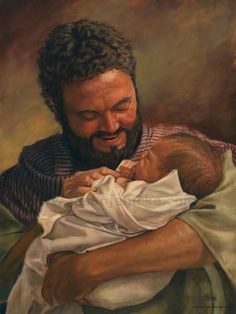
joseph-holding-jesus

Proverbs 1

The object of the book: To promote wisdom, discipline, understanding, righteousness, justice, equity, prudence, knowledge, discretion, learning, and guidance.

The starting point is reverential awe for YHWH.

Then paying attention to parental instruction.

Avoiding bad companions.

Wisdom’s cry of warnings, and the dire consequences of ignoring them.

Matthew 1:1-17

Jesus is the Messianic heir of David.

Matthew’s purpose in giving this incomplete genealogy of is to highlight Jesus’ Davidic ancestry. Hebrew consonants represent not only sounds, but numbers too, and the numerical values of the consonants in David’s name in Hebrew add up to 14 (d=4, v=6). The 14 generations give a numerical reminder of Jesus’ Davidic descent.

Matthew 1:18-25

In antiquity, kings were said to have miraculous births, and Jesus is no different. Not only is Jesus born by means of virginal conception, but the Messiah will bear a divine throne name–Immanuel, meaning “God is with us.” God is personally present with His people in and through Jesus–Wisdom in the flesh and so a greater royal figure than even the earlier ultimate Jewish sage, Solomon (12:42).

-from The Renovare Spiritual Formation Bible

Matthew 1:19-25

Joseph was a righteous, law-abiding man of God. But he was not a “by-the-book” only guy. He was open to spiritual direction and guidance in its many forms, listening for God directly-even if thru a dream. And He obeyed the voice of God.

May we never be confined to hearing God in only one way, or from only one place, even if it be the Bible, as great a source as that is. Joseph was a devout man, who no doubt studied God’s written word, which likely opened Him to the voice of God even more, since he had a heart for God.

Reading, studying, and meditating on the Bible is a very necessary means, never the end, of knowing God more deeply. The more we are in the word, the better attuned we become at hearing God’s “voice” everywhere we go. Joseph must’ve been pretty in tune to act so faithfully on what he heard.

Listen to and for God everywhere today.

Matthew 1:23

Look, the virgin shall conceive and bear a son, and they shall call him Emmanuel, which means, “God is with us.”

THE WITH-GOD LIFE.

Finally, the ultimate with-God event is announced to Joseph. God had been present with individuals, with a family, with a tribe, then with a people. Now God announces that he will be with us personally and will experience all of the limitations, humiliations, and sufferings that are our fate as humans (Heb.5:1-8).

How has the reality that God took on human flesh and lived among us changed your life?

What can you do to make it more real?

-from The Renovare Spiritual Formation Bible

September 30 / Proverbs 30-31

proverbs31-woman

Proverbs 30:1-4

I am worn out, stupid, and have mastered nothing.

Why not then go to the one who is never tired, who possesses infinite wisdom, and is Master of the Universe? (not He-Man)

Proverbs 31:3

Do not waste your strength on women.

Solomon.

David.

Think of how much strength, energy, and time they gave (wrongfully) to women that they could have devoted directly to YHWH. Sadly, they no doubt regretted their waste of energy at some point.

What do you give most of your strength to?

Be it your time, or your thoughts…?

September 29 / Proverbs 29

intelligent-pretending-fool

(not sure if the picture fits, but what a great quote!)

Proverbs 29:11

Fools vent their anger.

There’s quite a difference between seeking wise counsel, and merely venting. Venting serves self, to make self feel better, and do naturally what it feels like. Seeking counsel, seeking advice, however, is centered on the other person, on restoration.

Venting really just relives the negative. It recycles negative feelings and embeds further negative feelings toward someone.

Venting builds walls not bridges.

Of course we don’t keep things bottled up inside, waiting to explode. We release our negative feelings to God, who wants to hear from us, who can handle it, and who will direct us (if we listen) and give us peace. In holding nothing back in my conversations with God, I have found great healing. Also, a trusted person who knows you and is committed to keeping you from unproductive, toxic venting is good. A true friend will always hear you well and also guide you toward the path of peace. We must be heard, for sure, yet not allowed to stay in an unhealthy place.

Did you ever vent your frustration about someone (to a third party, not in the “ventee’s” presence) and afterward think more highly of them? Did you feel closer to that person? I sure don’t. I feel solidified in my demonizing of them. It deepens my ill thoughts of that person, justifies them even.

But seeking wise, godly counsel on restoration brings healing and more positive thoughts toward the person with whom you are frustrated. It moves you toward reconciliation. And is not this what  a follower of the loving Jesus would do?

We could significantly raise the level of Christian community if we simply refused to speak ill of anyone. This was one of A.W. Tozer’s agreements he had made with himself, to “never defame another Christian.” This is a pretty good covenant to make with oneself.

September 28 / Proverbs 28

honest-criticism

Proverbs 28:23

In the end, people appreciate honest criticism far more than flattery.

As you look back on your life, who is it that has helped sharpen you and mold you into a better person? Chances are it was not the person who always agreed with you and thought everything you did was awesome. It may very well have been someone a little harsher, but who wanted more for you than to let you sit around in complacency.

We don’t ever want to confuse encouragement with flattery. Encouragement is vital for survival in my book. Some who have been a great catalyst for growth for me have been those who did recognize something good in me and celebrated it. That is very hope-giving!

But flattery is quite different. Flattery comes from someone who does not seem to dig as deep or pay careful attention to you. Typically, they want something, whether it be a favor, or perhaps to divert your attention from something they want to hide. And it can be effective, right? Just tell me how awesome I am, and chances are I’ll get fixed on that pretty easily, missing the fact that you may be struggling with something destructive that you’d rather not talk about.

So beware of flattery.

Also, how much of Proverbs is about embracing criticism? It’s ubiquitous. If we can just get over our little selves, and accept criticism in order to improve, we’d grow so immensely in a relatively short period, if you ask me.

I’m working on putting aside that initial prideful reaction, and taking a look at what is being brought to light so that I may grow into more Christlikeness. Tho painful for a minute, it is very good and satisfying to grow as a human being, as a person God made to mature.

In the end, I don’t want flattery as much as I want growth in Christ. The fulfillment of growth toward God far outweighs the light momentary affliction of not feeling perfect.

Is it more important to you to become a stronger, more godly-minded person? Or is it more important to avoid pain and stay feeling good about where you are and where you stay?

how many obstacles to peace we construct for the sake of comfort and conformity.

-Laurence Freeman

September 27 / Proverbs 27 / John 21

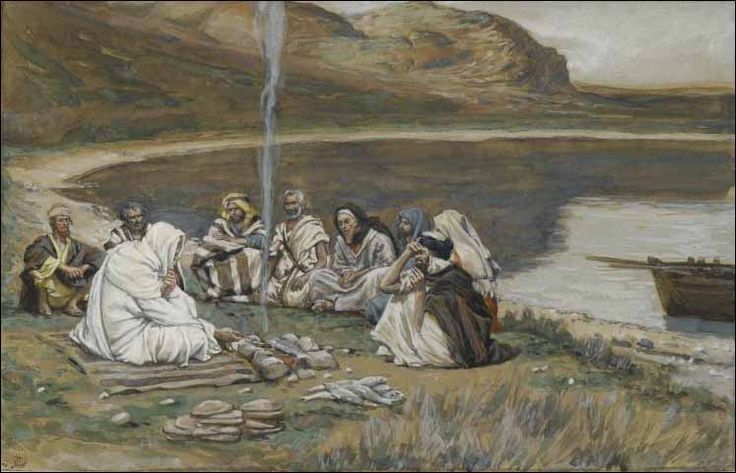
breakfast2

Proverbs 27:5

A public correction is better than love that is hidden.

Sages do not fear correction; indeed, they hope for it. After all, how else can they improve? Otherwise, they would be doomed to repeat their past mistakes. In any case, the openness of the correction is helpful; an unexpressed correction would not be. One might expect that kind of parallelism, something along the lines of “a public correction is better than discipline that is hidden,” but the contrast is even stronger with the introduction of “love.” Love would bring discipline, so that is included here, but the repression of love would serve the object of affection no good purpose.

-Tremper Longman III

Proverbs 27:6

Bruises of a friend can be trusted, but the kisses of an enemy are dangerous.

I believe it is of utmost importance to have at least one spiritual partner who knows you inside and out, who can call you out to make you better.

Rebuke doesn’t feel good, but it is so good for shaping you into Jesus.

John 21:14

This was now the third time Jesus showed Himself to His followers after He was raised from the dead.

That line just really moves me. Think about that today…

All the ends of the earth shall remember and turn to YHWH..

and all the families of the nations shall worship before Him.

For dominion (the “kingdom”) belongs to YHWH..

and He rules over the nations.

-Psalm 22:27-28