Category Archives: Daily Meditations

6.12.15–>”Contentment: Hebrews 13:1-6″

contentment

Hebrews 13:5b-6

be content with what you have. He himself has said, after all, “I will never, ever, leave you or forsake you.”

You have everything you need to be happy right now.

Contentment is ultimately a choice.

You have everything you need because you have God’s presence and love available to you forever.

We are all born with an innate desire to be loved for who we are without condition, and to be loved this way forever. There’s no getting around this. We may repress it, but it’s there for sure. And we are loved this way, some of us just haven’t recognized it yet.

This summer, we are doing our “State Parks Tour” with our girls, visiting all 25 Indiana State Parks. With each park, we have a truth (Gaby calls it “The Truth of the Hike”) that we go over all day to help sink in. Yesterday’s was “You have value and worth because of who you are, not because of what you do or don’t do.” This is what I told all of my Outreach kids. Most have never heard this. This is a basic, foundational, God-given truth of His universe.

You have everything you need to be happy right now.

By happy, we don’t necessarily mean bouncing off the walls, though you certainly could be. Satisfied, with a settled peace. Joy, really. I think you can be down or even depressed for a time, yet simultaneously joyful deep inside, resting in the contentment of God’s never ending presence and care. We have emotions, we feel the range of them, that is human, that is OK. Contentment can be the soundtrack of your life playing in the background while experiencing all of them.

You have everything you need right now.

Focus on what you have.

Not on what you can’t have or don’t have.

This is the difference between discontentment and joy.

Matthew 6:33 has been The Ripple Effect verse from day one: Seek first the kingdom of God and His way of life, and all the other things in life you need will be given to you.

I believe this with all my heart.

In Jesus’ name

6.11.15–>”Divinity Receptors: Hebrews 12:25-29″

Hebrews 12:28-29

Well, then: we are to receive a kingdom which cannot be shaken! This calls for gratitude! That’s how to offer God true and acceptable worship, reverently and with fear.

Our God, you see, is a devouring fire.

Jesus outside

I believe God wants our full attention all the time.

That human nature was created by God to be a receptor of divinity.

That Jesus, through constant attention to YHWH, was the purest receptor of divinity.

That God is greatly saddened when we are not fully attuned to Him, for He made us for communion with Himself.

What most takes your attention away from God?

What most turns your attention to God?

Praise God from whom all blessings flow.

6.10.15–>”A Parachute Pants View of God: Hebrews 12:18-24″

From Mount Sinai to Mount Zion

parachute pants2

Hebrews 12:18-24

You haven’t come, after all, to something that can be touched–a blazing fire, darkness, gloom and whirlwind, the sound of a trumpet and a voice speaking which the hearers begged not to have to listen to anymore…The sight was so terrifying that even Moses said, “I’m trembling with fear.”

No: you have come to Mount Zion–to the city of the living God, the heavenly Jerusalem. You have come to where thousands and thousands of angels are gathered for a festival; to the assembly of the firstborn, whose names are written in heaven. You have come to God, the judge of all, to the spirits of righteous people who have been made perfect, and to Jesus the mediator of the new covenant, and to the sprinkled blood which has better words to say than the blood of Abel. [KNT]

From these verses, do you have a Mt. Sinai view of God? Or a Mt. Zion view of God?

The first section is an obvious reference to the Mt. Sinai experience with Moses.  The second section is the new covenant experience of God mediated by Jesus. It’s not that God changed, but rather His form of mediation. Also, it seems God revealed Himself as appropriate to the humans of the time and their receptive abilities.

So with the Mt. Sinai view of God, you’ve got an emphasis on God’s holiness and humans’ unworthiness to be in His presence.

With Mt. Zion, you see an emphasis of grace, reconciliation, relationship, and joy.

Sinai, you’ve got the oh so delightful images of the untouchable, blazing fire, darkness, gloom, storm, trumpet blast, and a voice you beg to stop. Yeah!Woo hoo! Let’s party.

Zion brings us the images of the city of the living God, thousands of angels in joyful assembly partying hard, the church of the firstborn, God, the merciful judge of all, spirits of the righteous made perfect, Jesus the mediator of the new covenant, and His blood which has much better things to speak than Abel’s.

Much better.

Real quick on the blood thing in case you’re as confused as I was: In Genesis 4:10, after Abel was killed by his brother Cain, Abel’s blood “cried out” to God for judgement. By contrast, Jesus’ blood cries out forgiveness, reconciliation, relationship, peace, and joy.

So if your view of God is the old Mount Sinai scary, unapproachable, doom and gloom view, then your view of God is very outdated, like walking around today in parachute pants thinking you’re the most up-to-date hipster on the scene. That’s how ridiculous that view of God is today, after Jesus has done what He has done to bring us into intimate relationship with YHWH, clearing the path to Him which is now obstacle-free.

Yet some of us choose to walk around in our parachute pants, ignoring the fact that they went out of style some thirty years ago. Hey, it’s what we know, they’re comfortable to us, and still feel right for us today.

Go ahead and donate those suckers to Goodwill, or Broad Ripple Vintage, and step into A.D. It’s so good, so much better, so much more reality.

God is approachable now, thanks to Jesus. Very approachable. Stop living so B.C.

In Jesus’ name.

6.9.15–>”The Welcoming Prayer: Hebrews 12:1-17″

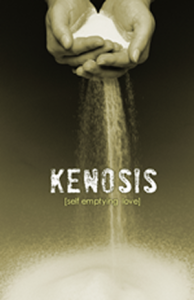
kenosis

Hebrews 12:7-8,11

You must be patient with discipline. God is dealing with you as his sons and daughters. What child is there that the parent doesn’t discipline?

If you are left without discipline (we’ve all had our fair share of it!), you are illegitimate, and not true children.

No discipline seems to bring joy at the time, but only sorrow. Later though, it produces fruit, the peaceful fruit of righteousness, for those who are trained by it. [KNT]

We saw yesterday that a major key to living life well is keeping focus. Keeping focus on Jesus, listening to Him in the midst of our pain and upset. He always kept His eyes on things above. The destination is the motivation as we say. The ultimate destination.

Verse 16  warns to not be an Esau. He is the prime example of giving up what was of ultimate value because he was so focused on the painful circumstances of the moment. He gave up his birthright for a bowl of soup for crying out loud!

But how do we do this?

Do we know how to stay focused or at least return to focus quickly from anxiety and stressful situations?

Recently I came across and started to practice The Welcoming Prayer. This is a concrete tool to help stay level-headed, to stay yourself, in the midst of pain.

So I’ll share with you this wonderful gift that is meant to be used in the midst of anxiety, but can be practiced anytime, and even useful in times when things are actually going very well. In those times it can be a recentering type of tool to realign our focus on where it needs to be.

The Welcoming Prayer is about surrender, which is spacious heart openness, not capitulation or rolling over! It has to do with keeping the right alignment inwardly that allows you to stay in the flow of your deeper sustaining wisdom. To “feel the force” as Yoda says. We’re not giving in or caving, we’re doing the work to stand our ground in who we know we are and in full awareness of the situation. This may be different from what we learned surrender to be.

It is a way of acknowledging God’s presence in the midst of a distressing physical or emotional situation.

It works at the level of sensation, not attitude, in order to actively imprint kentoic surrender as the innate first response to all life situations. With the Holy Spirit, we can train ourselves to always respond to stressful situations as Jesus would, in love.

Kenosis-to let go; to empty oneself. Self-emptying love. Bringing yourself into a state of “unconditional presence.”

Your energy is not squandered in this state, but brought into the service of spiritual transformation.

It can also be used in times opposite of pain–when feeling smug comfort or self-importance.

The Practice

It consists of three steps

  1. Focus or Sink In
  2. Welcome
  3. Let go

FOCUS

Become physically aware of the sensations in your body. (Do a body scan)

  • Chest tight?
  • Breathing shallow or forced?
  • Heart pounding?
  • Teeth clinched?
  • Gut knotted?

Don’t try to change anything, just stay present. Do not analyze or justify yourself. This does two things:

  • Guarantees you won’t repress or dissociate from your emotions
  • Forces you to stay with sensation, where the work is really going on anyway

WELCOME

This part may be odd or counter intuitive for some of you, but stick with it.

Say, “Welcome, anger,” or “Welcome, fear,” or “Welcome, pain.”

The point isn’t to get rid of it, but to not let it throw you out of presence. The only way to do this is to wrap your deeper self around it through the power of your compassionate attention.

(Take note that you are never welcoming an outer situation, only the feelings and sensations working within you at a given moment. If someone is yelling at you, verbally abusing you, you don’t say, “Welcome, verbal abuse.” No, verbal abuse is not ok or justified.)

Welcoming roots us firmly in the now.

Surrender means doing something out of the power of integrity, not knuckling under to coercion or abuse.

Here is a powerful quote for thought by Rainer Maria Rilke:

Perhaps all the dragons in our lives are princesses who are only waiting to see us act, just once, with beauty and courage. Perhaps everything that frightens us is, in the deepest essence, something helpless that wants our love.

LET GO

The most important thing here is to only take this step when you are ready! It takes some time to be ready to let go.

And remember that it is only for the present moment. You’re not saying, “I’ll never be angry again.” Life is not so much about never getting knocked down, but about getting back up.

There are two ways of going about this step:

  • You can simply say, “I let go of this anger.” (or fear or pain)

Or you may choose this powerful fourfold prayer

  • “I let go my desire for security and survival.”
  • “I let go my desire for esteem and affection.”
  • “I let go my desire for power and control.”
  • “I let go my desire to change the situation.”

Those first three are the “energy centers” of the false-self system. Our core woundings in these areas, together with our misguided search for compensation, drive most of the unconscious behavior which is the source of our continual human suffering. By praying this, you are sending a very strong message to the unconscious! The fourth phrase ensures that you are not trying to fix the situation.

It may seem craziness to relinquish these basic requirements, but we are talking about even deeper truth than that which is really closer to the surface. Here are a few quotes beautifully expressing the deeper wisdom:

Whoever makes all cares into a single care, the care for simply being present, will be relieved of all cares by that Presence, which is the creative power. -Kabir Helminski

It’s not about giving up things we want or rolling over and playing dead. It is about connecting with an energy source of sustenance so powerful and vibrant as it flows through our being from the infinite that all else pales in comparison…The core secret we are coming to understand is that the act of letting go, spiritually understood as a cosmic energy exchangeis the power by which Jesus could live and remain true to his path. -Cynthia Bourgeault

Paradoxically, the more we focus on Jesus, on the ultimate destination and what really matters, even in the midst of troubling circumstances, we actually become more tuned in to the present moment, with all our faculties and awareness in tact so as to be able to overcome the situation because we stay connected to our power source.

I really believe this is the way Jesus lived His life on earth. He was so present at all times, so aware, that He always had clear access to the supernatural. I think His head and heart were so in the clouds, focused on His father, that He was more grounded than any other human being.

In Jesus’ name


6.8.15–>”Kataphroneo: Hebrews 12:1-17″

Focus

Hebrews 12:1-2

What about us, then? We have such a great cloud of witnesses all around us! What we must do is this: we must put aside each heavy weight, and the sin which gets in the way so easily. We must run the race that lies in front of us, and we must run it patiently.

We must look ahead, to Jesus. He is the one who carved out the path for faith, and he’s the one who brought it to completion. He knew that there was joy spread out and waiting for him. That’s why he endured the cross, making light of its shame, and has now taken his seat at the right hand of God’s throne. [KNT]

focus on Jesus

Just a tiny bit of Greek has helped me grasp a deeper understanding of verse 2 here. Kataphroneo, translated here in The Kingdom New Testament as “making light of,” means to treat someone or something as if he or it had little value. Or you might say you reckon it to be of no value or importance, to “set it at naught,” emptying it of its potency. Disesteem.

As a young padawan,  growing up in AWANA, I memorized Scripture out of the KJV. (No doubt, some of you have no idea what I just said.) There, it translates kataphroneo as “despising.” I was also familiar with the NIV’s rendering: “scorning.” I never really understood those words I had memorized and recited so many times. “Despising the shame,” yeah I’d despise that shame too! “Scorning?” Who uses that word anymore?

But we see a much deeper meaning here when we look at the rich and nuanced Greek. Jesus carved out our path by looking beyond the immediate, painful circumstances to the reward ahead. He treated the shame of the cross as insignificant or of little consequence, when compared to the joy awaiting Him up ahead.

Therefore, we are encouraged to look beyond our present difficulties and ahead to God’s promises. We are to fix our eyes on Jesus, as some translations read. This is how we endure hardship. This is what gets us through–looking to Jesus, looking ahead, beyond our present situation, beyond ourselves. Jesus reckoned the shame of the cross insignificant when compared to the joy waiting ahead of Him. As long as you’re focused on your crap, you’re a mess, depressing to be around, and most likely, a notch above useless.

I know this is harsh, but it’s true when you think about it. And I’ve been there, and still go there. I understand, I do it too. In this state, I am pathetic and no help to anyone. But hey, that’s a good place to be for calling out for help. And here we see the key. What I believe to be a major and yet very difficult necessity for living the Christian life is attuning our heart’s eyes and ears to Jesus in the midst of pain and discomfort. Reaching out to others for help when we need it as opposed to isolating into withdrawal and pity which becomes even more painful than the actual circumstance we find so awful!

We have every power and comfort at out fingertips, within us even, if we can only focus on Jesus and access it in those rough times.

When I said how pathetic and useless we can be in the self-focused times, I’m really talking about a perpetual state of problem-focused living. We’re all gonna go through stuff, that’s life. We’re all gonna get down. But what do we do with it? Who do we lean on?  Where do we go? Staying in our upset, focusing on it, gives it more energy, power, and cancer-like growth.

Energy flows where attention goes.

And while focused on your upset, you generally complain. A lot. You drag people down with your whining.

We definitely want to be safe places for each other to unload, but we also do not want to allow each other to remain stagnant “treading water in a sea of mediocrity.”* As a wise preacher, whose name rhymes with “Rod Swisher” once said, “Jesus meets you where you’re at, but he doesn’t let you stay there.”

Can we talk about the above picture for two seconds? Yeah, I know, it’s very cheesy. Yet, it so simply displays a very basic, foundational truth. Perhaps, in its cheesiness, it will be memorable, and it can be a trigger to help you refocus on our Master, our Pioneer of faith, who is always there, ready to comfort us and guide us in the midst of even the worst circumstances or mindsets.

In Jesus’ Name


*from This Is Spinal Tap


6.5.15–>”An Impressive List of Unimpressive People who had Impressive Faith: Hebrews 11″

hall of faith

Hebrews 11 is that famous “Hall of Fame of Faith” chapter. Or simply “Hall of Faith.”

I don’t know about you, but when I read through this list of people, I’m not impressed. Not with the people themselves at least. It’s quite the list of screwed up, character-flawed people with issues and multiple failings. I mean, I don’t know if I would hire any of these people to even do work at my house, as shady as some of them are.

This is our so-called “Hall of Faith.”

Yikes.

God help us.

And yet.

What amazing things God did accomplish through them.

Because of their faith. Because of their unending trust in God. And their faith translated into some sort of action from that faith.

Not because they themselves were extra special or had unique qualifications.

So we see that these are not awesome special super human Bible characters that we can never aspire to. Rather, we see these are very ordinary people, many of whom would receive a diagnosis of some kind in today’s world, who did have enough faith at least at some point in their lives to act on what God asked of them.

We can never use the excuse that we’re just not one of “those people.” It is their faith we are to emulate, not their character necessarily. I don’t want to emulate running from God, having someone’s husband killed, killing a person myself, being deceitful, tricking my dying, ailing dad, etc.

What I do want to emulate is their faithful trust in God which translated (only after running away, for some of them) into action which was rewarded. We don’t look to others to be like them. We look to Jesus to become Him. But we do gain inspiration from others who have gone before us and acted in faith to God, from those who, no matter what, never ultimately turned their back on God even though they may have had their doubts at times; from those men and women who screwed up royally but never stopped believing God exists and is the ONE.

And by the way, the reward is not always a life of ease, blessing, and bounty. So be careful of the teachers and preachers who say that that’s what God always will reward you with here in this life. Unless you think being sawn in two is health, wealth, and prosperity. Hey, maybe it is prosperity in the kingdom, and when we see God. Who am I to say? The reward is God’s commendation, which is always worth dying for. Why else have so many gone through so much when they didn’t have to?

So in sum:

  • God uses anybody with faith, and I mean anybody
  • True faith always translates into action
  • Faith is always rewarded, but in a variety of ways in which we may not think of, perhaps in this life, perhaps not until the next

God’s pilgrims look beyond the immediate to grasp the significance of the ultimate.

In its essence biblical faith involves people orienting their lives to God and his values against the “perceived” realities and values espoused by the world.

-George Guthrie

6.4.15–>”What is Faith? Hebrews 11 (pt.2)”

coffee_with_jesus

Hebrews 11:1

Now faith is the substance of things hoped for, the conviction of things not seen.

Based on this translation and looking deeply into it, I’ve written my own definition of faith:

Faith is the imaginative mental, physical, or spiritual representation of a confidently hoped for reality precipitating from a conviction of what is true based on the evidence for that which cannot be grasped with the five senses.

That is very helpful for me, and I hope can even be a little helpful for a few other people.

I really like what John Chrysostom had to say about this verse over 1,600 years ago:

For since the objects of hope seem to be unsubstantial, faith gives them substantiality or rather, does not give it, but is itself their substance. For instance, the resurrection has not come, nor does it exist substantially, but hope makes it substantial in our soul. This is the meaning of “the substance of things.”

(He of course was talking about the eschatological resurrection of the dead, not the resurrection of Jesus which had happened a few centuries before he wrote this.)

So the substance of our hoped for reality is what is manifested and born out of our motivation that results from our mental and spiritual representations of that reality. In other words, our actions come from our vision. We live out our faith, whatever it may be. The “movies” playing in our minds most of our waking hours are what get acted out in our real lives each day.

Your faith, we could say, is your vision, or what you envision most of the time. Whatever you envision most will motivate, inspire, and drive you to do what it takes to make that vision a reality. Or possibly to keep that vision from becoming a reality, if it something you wish faithfully to avoid.

We can see this in the two passages where Jesus tells stories to illustrate the importance of praying persistently, audaciously, and full of faith in Luke 11 and Luke 18. The women in each story are motivated (out of envisioning a coming reality) to pester someone for something until they receive it. In Luke 11, she has no bread for her guests, and it is her picture of the embarrassment or shame of not being able to host properly. So she bugs her neighbor until she gives her some bread. In Luke 18, this woman sees the awful probable existence under an injustice she has suffered unless this judge grants her some justice. So it drives her to bother him to the point of his giving in so she doesn’t give him a black eye!

We see then that faith is not always so much about sitting around and asking for things, believing with all our might they will magically come true, but rather an envisioning of God’s kingdom and what it may look like, to the point that it motivates us to get up and do something about it and bring about (substantiate) that beautiful reality we so very much believe in.

Does that make sense?

It’s not a pressure that we have to usher in the kingdom or else God is hosed. It’s that God does indeed use people to usher in His kingdom, so why not be a part of that pure awesomeness?

Ok, enough of my yakkin’. Allow me to share some words from Greg Boyd on this subject, because they’re really good.

Faith involves embracing a vivid vision of an anticipated future that in turn gives rise to a compelling conviction that moves us toward that future.

We exercise faith when we imaginatively represent, as a substantial reality, something in the future to be God’s will. And just as evidence produces a conviction in a person, our imaginative representation produces in us a confident motivation to do what is necessary to bring this imaginative representation into reality.

These real-seeming imaginative representations with their accompanying motivating convictions are generated in our minds all day long, and while most people are conscious of very few of them, they exert the single greatest influence in the direction our lives take–hence the truth of Jesus’ teaching, “According to your faith it will be to you.”


6.3.15–>”What Exactly is Faith? Hebrews 11″

Hebrews 11:1

Now faith is the substance/essence (hypostasis) of things hoped for, the conviction from evidence (elegchos) of things not seen.

mental representation

Whatever faith is to you may very well depend on how you translate Hebrews 11:1. Or it may come from how others have translated this verse for you.

Let me give you what I’ve found recently to be very helpful.

I believe the above translation to be the most literal, and in this case appropriate (literal is not always the most appropriate), and nearest to the intended meaning of this verse and extremely important intended definition of faith.

No longer do I think that faith is the working up of certainty with no allowance for doubt. As in, pushing doubt away and never facing anything that makes you doubt.

I believe it to be the very substance or essence of what we do hope for in a real way. This hearkens back to chapter one of Jesus being the essence or substance of God. We could then say the representation of God. Our faith is a representation of things we hope for. Here we get into the imaginative mind.

Faith is not a convincing ourselves of facts that must be true. That’s not a representation.

Think of someone you love right now.

Did you find yourself reciting their height, weight, age, or eye color? Or did you picture a representation of them in your mind?

Could this be how faith works? Representing or substantiating our hoped for reality?

Elegchos.

Conviction from evidence of things not seen.

I am convicted by the evidence of the universe that there is a God and that this God is beautiful and loving. Do I know this from being there when God created it all? Of course not. So does doubt sometimes creep in? Of course it does. But I am boldly confident in the evidence to the point that there is a conviction of what is real and even hoped for.


Soli Deo Gloria