Category Archives: Articles
The Thought Rhyming Practice
Thought Rhyming
see God seeing you
- I can see you
- I can hear you
- I can understand how hard this is for you
- I am glad to be with you
- I can do something about what you are going through
Step 1) I can see you
The way we respond to the question, “How does God see me?” is key to determining if we will move toward or away from God. In thought rhyming we write from God’s perspective. God watches us with love and describes to us what He observes. To begin this for yourself, you will describe what is happening around you and inside you (as much as you are able) through the eyes of God.
1. Begin writing about your observable actions and surroundings as if God is describing them back to you.
Examples are:
“I can see you sitting at the table.”
“I see you drinking a cup of coffee.”
“I can see you watching TV.”
“I can see you staring at the computer screen.”
“I saw you pacing back & forth in the dark.”
“I have seen you yelling at your kids.”
2. Write about your body movements, sensations, expressions, or physiological responses that others might not be able to notice with their bare eyes.
Examples are:
“I can see that your jaws & fists are clenched.”
“I saw the heaviness in your chest making it difficult to breathe.”
“I can see that your shoulders are scrunched up.”
“I see you holding your breath.”
“I can see your heart beating fast.”
“I see that you are about to explode.”
“I can see your eyes tightening as tears are welling up.”
“I saw your mind going blank and your body freezing up.”
“I can see the knots in your stomach churning.”
Step 2) I can hear you
Now we answer the question, “How do I think God hears me?” We write what God is hearing us say out loud as well as what we are thinking internally. Listen as God describes back to you what He hears & write down His description. At this point we are just allowing God to describe and help us bring our thoughts to the surface, regardless of whether we judge them as good or bad. It may be challenging for us to believe that God can hear all our thoughts without condemning us. It is easy to get stuck because we start to judge our thoughts and ourselves. This step is focused on perceiving the fact that God hears all our thoughts. He is allowing us to experience being truly listened to instead of having us experience correction or teaching. In order to stay relationally connected, we must experience being heard.
We may be surprised at the sheer number of thoughts going through our mind. It will be tempting to dismiss many of them. But it is important to get in the habit of writing these thoughts down (naming them), even if they seem unusual or irrelevant, as it can be very helpful to bring to the surface something that needs resolution. In other words, there can be lies or vows embedded in these thoughts that were developed as a way of coping with our pain. When those thoughts remain hidden & are not replaced with truth, we retain pain.
1. Begin writing as God simply says back to you what He hears from your speech & actions.
Examples are:
“I can hear you yelling & screaming.”
“I heard you crying quietly.”
“I can hear you say to your spouse/child/co-worker/parents, ‘I hate you.'”
“Get away from me.”
“I do not trust you.”
“I feel unsure about this situation.”
“You do not know me.”
“I am done with you.”
2. Continue writing about unspoken words in your mind. God simply recognizes what He hears from our inner thoughts. If there are too many thoughts, you can list them in bullet points.
Examples are:
“I hear you judging yourself.”
“I hear your heart & mind racing.”
“I heard the excitement in your voice.”
“I hear you saying, ‘I am dumb. Here we go again!'”
“I have heard you trying to calm yourself.”
“I hear you saying to yourself, ‘I should be angry! It’s not fair. She can’t do this to me. I should have known. I wish I could have done it differently.'”
“I hear the deep desires of your heart.”
“I am hearing your fears that you are too ashamed to acknowledge.”
“I hear the quiet resolution in your heart.”
Step 3) I can understand how big (hard) this is for you
Sometimes we minimize our pain. Often we deny ourselves permission to receive comfort for the seemingly small moments of pain. We minimize our apparently minor trials, compared to the perceived bigger challenges of others. We do this to ourselves & others. God, however, sees, hears, knows, & understands why a particular issue is so big for us. God knows our history. No matter how insightful a therapist may be or wise a friend is, only God can ultimately know the intricacies of our lives & experiences.
Validation moves mental experiences toward resolution by accurately stating their “size,” that is to say, intensity & impact. Without validation we will not be comforted. Comfort follows validation & gives us peace. When we validate how big or hard our experiences were, we can then calm our brain.
In this third step we put in words our impression of God’s accurate understanding of how important something is to us. He is able to illuminate our responses & grant us forgiveness, understanding, & comfort. He also gives us a model to follow. Through this step we may discover we are reacting to something in the past.
Examples are:
“I can see this is a pretty big deal for you.”
“This feels all-consuming for you.”
“It looks like this is about to overtake you.”
“This is as big as when your parents announced their divorce.”
“This is a big deal, but workable.”
“I understand how sad you feel about this.”
“I understand how angry you are; it makes sense to me.”
“I understand why this is so hard for you. You have always felt alone so even though you understand in your head, your heart is about to burst with fear.”
“I understand why this is so big & scary for you. I know you feel like you are not able to get my attention, and that scares you. I know that growing up, you or your experiences were never the priority for your parents.”
Step 4) I am glad to be with you, and treat your weaknesses tenderly
We think that our sin or weaknesses will keep God away from us. We might even think God cannot associate with sinners. However, God is always glad to be with us just as we are. Whether we feel connected to God or not, none of our weaknesses keep Him away. In God’s presence we are transformed. Peter was restored once he experienced that Jesus still wanted him in spite of his weakness (John 21).
In step 4 you will write God’s confirmation of His love for you by hearing Him say, “I am glad to be with you, My child.” Write what you perceive God might be saying to you in a kind, tender, & loving way.
Examples are:
“I am glad to be with you, and I see your weaknesses tenderly.”
“I am always glad to interact with you anytime including this moment of frustration/pain/sadness. You might judge & condemn your lack of trust in My goodness & love, but I never condemn you. Rather, I am glad & thankful that you are here with me.”
Step 5) I can do something about what you are going through
God not only validates our pain, but also guides us in our difficult situations.
In step 5 of thought rhyming, we write down what God might be saying to us about how He will be with us & help us. We may be reminded of God’s faithfulness in the past & given hope of His continuing work in, around, and through us. Scripture quotes & stories often come to mind during this time. Sometimes we find God asking us to do the difficult & hard work of living as His children. While reminding us who we are, God invites us to live according to our true heart. The promise of His constant presence, His unfailing love & His pure goodness will sustain us. Write your impression of what God is offering you.
Examples are:
“I will help you. I will help you to continue to see more clearly who I am and what I have been doing in your life and in this world. I will continue to make your heart tender so that the seeds of My Word & My Spirit will be able to grow & thrive in your life. I have you in the palm of My hands. I love you.”
“My Spirit will hold you. We are praying for you. We are upholding you. We are protecting you. We are shielding you & always encouraging you. Look up, My child, in your despair & see through the eyes of heaven. We will never let you go, & we will never let you stay down. We love you intensely & without borders. Our love for you is greater than your inability to trust & your idolatry & your fear. We will get through this. We are protecting your children. We are your God, the Father, the Son, & the Holy Spirit. We are powerful beyond measure.”
“I will uphold you with My righteous right hand. Meditate on My goodness & on My truth. You will begin to see clearly, & the spirit of confusion & self-condemnation will leave. I will be with you tonight & give you good rest. I want you to sleep knowing that we can resolve this together. I will give you the words to speak to clarify the situation, & I will give you a heart of flesh so that you may be able to see from her perspective.”
These five steps form the sequence of thought rhyming with God. His perfect attunement & validation reveal to us that He clearly sees. God is glad to be with us in all circumstances. He is always initiating the restoration of our relationships with Him & others. He is continuously working on our behalf. “Immanuel Journaling” allows us to be more aware of these truths.
Image of God
Foundations

One of my favorite C.S. Lewis quotes is, “People need to be reminded more often than they need to be instructed.” I agree wholeheartedly. Which is why I’ve been reading a lot of the earliest Christian writings this year. It is good to be reminded of what the first Christians thought and believed and held on to for dear life.
One of those early church fathers was Athanasius of Alexandria (296-373) who wrote the amazing work “On The Incarnation.” [There were early church mothers too, quite prominent in the early church, but unfortunately the culture being what it was, we have very little of what they said or wrote.] In the English translation I that read, it had an introduction by C. S. Lewis, and in it he wrote that he encouraged his students, and all Christians, to read an ancient work for each modern one. Why? Well for one, the ancient classics have been tried and proven for centuries. Modern works are still “on trial.” The classics are classics because they transcend time and culture. Also, they take us back to our foundations, and those early church leaders were dedicated to preserving in written form the basics of Christianity. It is always good to be reminded of these truths we hold as core to our belief, indeed, to our lives.
Boniface Ramsey is an author who has studied the early church fathers and translated many of their works himself. He lists what they affirm as broad theological propositions that have remained central to Christian orthodoxy across almost all denominational lines. They are:
- Belief in a triune God
- The fully human and fully divine natures of Christ
- The redemptive efficacy of Christ’s death on the cross
- The absolute authority and infallibility of Scripture
- The fallen condition of humanity
- The significance of baptism and Holy Communion
- The vital importance of prayer and a disciplined spiritual life
Ramsey says, “Belief in these things, which the fathers unanimously proclaimed, even if they proclaimed them in different ways, continues to be the distinguishing marks of Christianity to this day.”
Amen.
And I would say, just to be crystal clear, that it is implicit from this list that they believed in the bodily resurrection of Jesus (redemptive efficacy), which is why it is so prominent in all of the early creeds. And they and the biblical writers believed that Jesus was in fact God (YHWH) in human form. On this they are quite clear.
So there you have it, a quick look at those basics of our faith, that are always good to review. I am amazed at how many people claiming to be Christians have a problem with multiple things listed here. Don’t get me wrong, this is no checklist mentality, but rather the stuff of life given to us by Jesus Himself. If you have issue with any of these basic foundational beliefs of our faith, I encourage you to look into them more deeply.
I hope this has been helpful!
The Meaning of The Ripple Effect Logo

The Ripple Effect logo was created by my talented friend, Jill Sauerburger. It is beautiful to me.
I thought it might be a good idea to take a moment and explain the significance behind it. It’s good to pause from time to time in order to review and remind ourselves of the meaning represented by those simple visuals we may encounter on a daily basis.
Symbols and icons representing rich truths are powerful and memorable. This logo was created with purpose, not necessarily just to look nice.
First off, let us simply say that the concept of “the ripple effect” reminds us that everything we do matters.Everything we say and do affects someone else. Actually, a lot of someone elses. It’s been reported that even the most introverted person will have a significant effect on ten thousand people in their lifetime. Everything we do affects the world in some way.
So this is represented by the most obvious part of the picture, the ripple right in the middle caused by the dipping leaf. What I like about the look of the branch, leaves, and ripples is that they are not neat, perfect, angular lines. It’s messy. Our journey and pursuit of God is not always perfect or goes as planned and predicted. This reminds me that the spiritual life is more about obedience than it is agenda. The word “THE” being on its side also lends to showing the reality of these unpredictable, not-always-how-we-think-it-will-look ways of God.
Notice how the ripples go out of the picture into the word “ripple.” What we do affects more than we think, see, anticipate, or know. What we do and say ripples outside of our normal, limited view. This should sober us, but also excite us to trust in what we do for the love of God, even if we don’t actually see the effects ourselves. They may just be outside our view.
The word “ripple” is all lower case. So many times we don’t feel our words or actions are significant. They seem so small, unheard, or unheeded. But the effect is greater than we know, thus the big bold word “EFFECT.” Do small things with great love and you will most certainly change the world for the better!
Finally, my favorite and most important part of the picture is that which you do not see. The branch isn’t hanging from mid air. In order for it to keep dipping in the water, it must be connected to a tree. This is Jesus, the true Vine, and us, the branches, from my favorite passage in all of Scripture–John 15:1-11. Not being able to see the tree reminds us that God is truly ineffable. And yet, we know He is there. He must be always there.
How beautiful a branch is when it is gently swayed by the wind. Jesus compared the Holy Spirit to the wind, the breath that moves us. Only a branch connected to the vine can be moved in this way. Disconnected, lying on the ground, not much happens other than withering.
May we stay connected to Jesus in order to affect the world supernaturally and forever, for good and for love–for God.
Hope you’ve enjoyed this, and that you will be reminded of these truths whenever you see The Ripple Effect logo!
Strength of Relationship
The frequency and quality of your interactions determine the strength of your relationship.
With God.
With people…
Meet Madame Jeanne Guyon
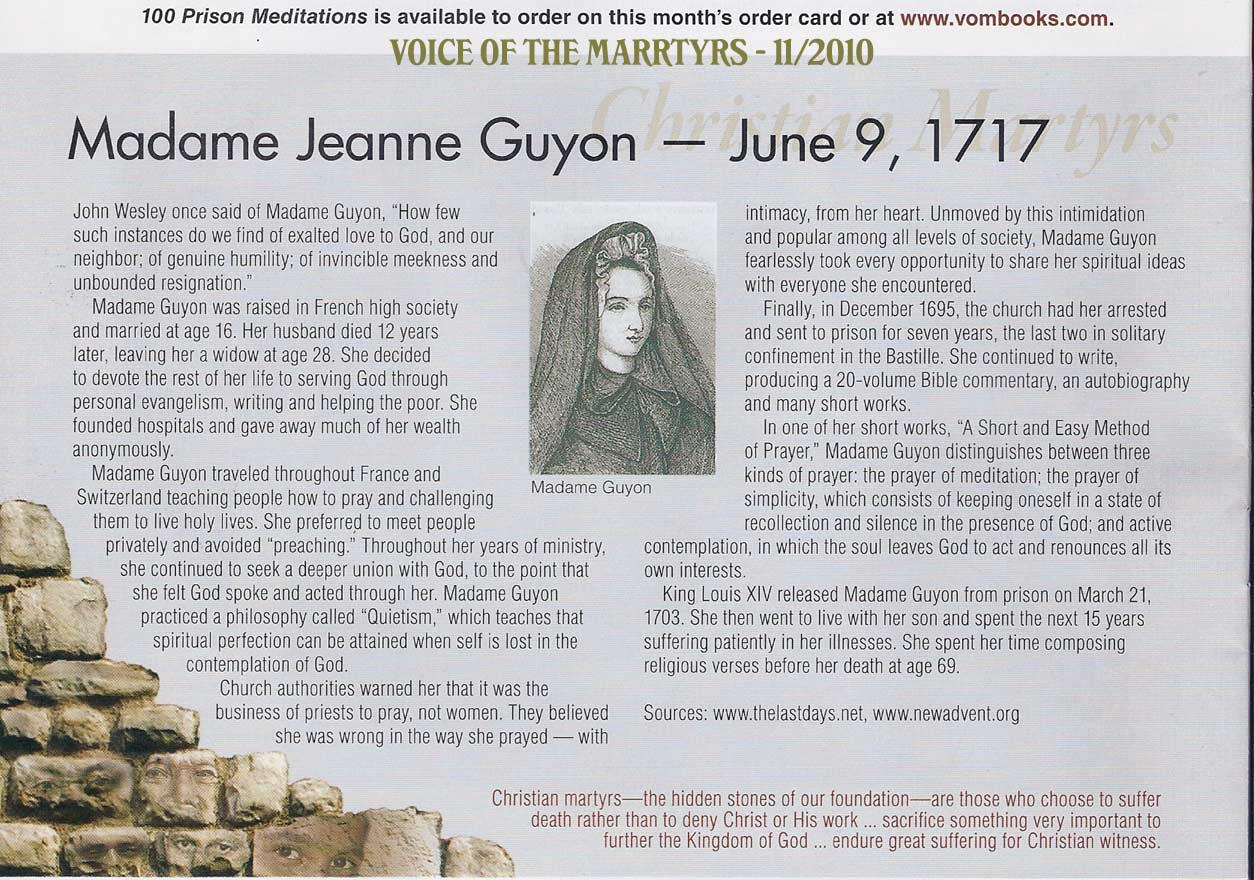
[click on picture to see full size]
Forget yourself. Think only of Him. In doing so, your heart will remain free and at peace.
It is essential to continually submit your will to God’s will and renounce every private inclination as soon as it arises–no matter how good it appears. You must want only what God has willed from all eternity. Forget the past. Devote the present to God. Be satisfied with the present moment which brings God’s eternal order to you. Attribute nothing that happens to you as coming from man, but regard everything, except sin, as coming from God.
-from Experiencing God Through Prayer p.28
Nature–this is the truest thing I’ve seen in quite some time….
12.30.15–>”My 11 Favorite books I read this year”
If you’re interested, I thought I’d share my eleven favorite books that I read and finished this year, as well as a short word on why I liked them so much.
Not everyone has the time to read that I am blessed with, so you want to be selective, and maybe this will help pique your interest to a few wonderful writings.
- Jesus of Nazareth: What He Wanted, Who He Was (2012)–Gerhard Lohfink This is probably the deepest book on Jesus I’ve ever read. And yet it is extremely accessible. I now feel I have finally started to grasp Jesus of Nazareth in His Old Testament & Jewish context. Incredibly enlightening. You think the subtitle is a little bold and daring, like “Who do you think you are to say what He wanted & who He was?” Then you start reading. And you’re like, “Oh…..Wow…..OK.” A big takeaway: Jesus did not do away with the Old Testament; He geniously interpreted it rightly…as no one else ever did.

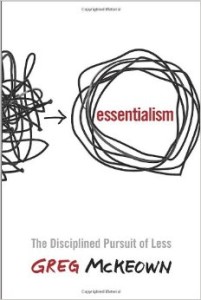
- Essentialism: The Disciplined Pursuit of Less (2014)-Greg McKeown I’m listening to this for a second time because it was so very good and practically helpful. “Sacrifice the trivial many for the vital few” is the mantra throughout this book, as well as “Less but better.” Most of our life is noise, and here’s how to do what really matters. It’s not that this info is terribly new, it’s that McKeown’s delivery of it is so terribly awesome! I listen to a little bit of this almost daily as a constant, helpful reminder.
- Fully Human, Fully Divine: An Interactive Christology (2004)-Michael Casey This is also the deepest book I’ve probably ever read on Jesus. It is deep in the heart/emotional sense. This Aussie monk, Casey, has become one of my absolute favorite authors this past year after reading Toward God and now this. Amazingly in tune with humanity and able to communicate it more viscerally than most anyone I’ve read.

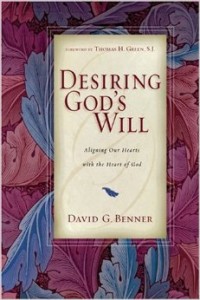
- Desiring God’s Will: Aligning Our Hearts With the Heart of God (2005)-David Benner This is the 3rd book of a most amazing trilogy, the first two being Surrender to Love & The Gift of Being Yourself. I’d probably put this trilogy second to the Star Wars trilogy. Each one of these I end up putting my highlighter away because I’ll just end up highlighting the entire book. A major helpful idea Benner illumines is the difference of willfulness and willingness, and how it changes our lives.
- Escaping the Matrix: Setting Your Mind Free to Experience Real Life in Christ (2005)-Greg Boyd & Al Larson This is one of the absolute most practical books on how to really live your actual life in Christ. There’s neuroscience, exercises, examples, and plenty of Scripture. So many Christians are not free because they have not allowed Jesus into their subconscious, which is way faster than your conscious mind, and dictates reactions and deep emotions. This book shows you how to let Christ in to the deep recesses of your heart and life. I’ve used one of the exercises, “Experiencing Jesus”, with a couple of groups now, and it’s been deeply moving.

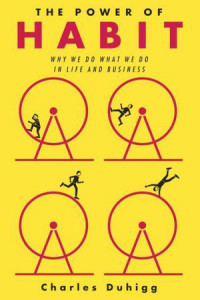
- The Power of Habit: Why We Do What We Do in Life and Business (2012)-Charles Duhigg An extremely well written and fun read on the science of habit. You are a product of your habits, whether you like it or not, for good or for bad! Whether you know it or not, you are in the habit loop of “Cue-Routine-Reward.” Wake up to it, and harness its power!
- Abide in Christ (1882) Andrew Murray Every word of every book I’ve ever read of Andrew Murray is absolute gold. There is never a doubt about this guy’s devotion to Christ, or that he was totally tuned in to the Holy Spirit. You just can’t fake it and write the way this guy writes! I read a couple of Murray books every year no matter what. He wrote a lot of his books in the format of 31 short chapters so as to be digested over the span of a month. If you’ve never read Andrew Murray, then you’re probably not a real Christian. I’M KIDDING. But seriously, go read one of his books immediately.

- The Illumined Heart: The Ancient Christian Path of Transformation (2001)-Frederica Mathewes-Green This little 102 page gem was the “surprise hit” of the year for me. I found it in the clearance section of Half Price Books, not knowing of this author. It looked quite intriguing, and proved to be very formative for me. She reminds us of the mind set of the earliest Christians from the first and second centuries. Their goal was to be one with Christ–no matter what. Their practices all led toward that end. (We sent “Is Theosis Our Telos?” based off this book.)

- The Shallows: What the Internet is Doing to Our Brains (2010)-Nicholas Carr As the title states, we are becoming more shallow due to what the internet is doing to our brains. Here’s what’s been said of this masterpiece: “Eloquent,” “Riveting,” “Rewarding,” “Revelatory,” “Grade: A,” “Absorbing [and] Disturbing,” “Essential,” “Provocative,” “A Book Everyone Should Read.” I agree with all of these descriptions. It is incredibly fascinating, packed with history, science, and page-turning eloquence. This was very enlightening, and confirmed many suspicions of the internet dumbing us down as we sacrifice ourselves to it. Also, it was a finalist for the Pulitzer Prize.

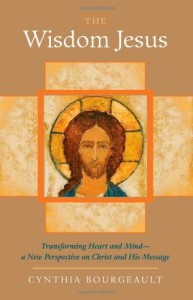
- The Wisdom Jesus: Transforming Heart and Mind–A New Pespective on Christ and His Message (2008) Cynthia Bourgeault This gives a different angled look at Jesus, helping you to see Him through, most likely, a new lens. She looks at Jesus through the wisdom tradition, yet without taking away from His divinity. And that, is something I really loved about this book. A couple of takeaways were The Welcoming Practice and Kenosis.
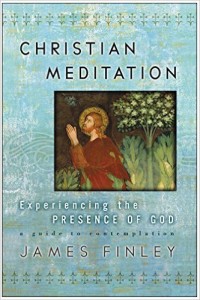
- Christian Meditation: Experiencing the Presence of God–A Guide to Contemplation (2004)-James Finley One of the most beautiful books I’ve ever read, to put it simply. And possibly my favorite cover of all time. The title says it all, what most of my life is about these days. So I loved this book with the deepest of loves. Just now I opened the book randomly to page 143, where I have this highlighted: “We meditate that we might live in a habitual awareness of God living in us, for us, and by us in all that we simply are.” BOOM.


This has been fun! Enjoy your day!!
11.12.15–>”Thought Authority”
To the extent that we do not take authority over our thoughts, something or someone else will.